
Posts

When a disaster strikes a coastal or island community, the cruel irony is that water is everywhere and none of it is safe to drink. Floodwaters contaminate wells. Earthquakes rupture distribution lines. Storm surge pushes saltwater into freshwater aquifers. In many cases, the affected area is surrounded on all sides by the ocean, an essentially unlimited water source that requires the right technology to make it safe.

For NGOs, UN agencies, government emergency response teams, and disaster relief organizations operating in coastal and island disaster zones, the operational question is not whether a water source exists. It is how quickly a containerized desalination system can be deployed to treat it.

Venezuela’s June 2026 earthquakes brought this question into sharp focus. A country already experiencing a near collapse of its water infrastructure, with up to 80 percent of its population lacking reliable access to clean water, was hit by the strongest seismic event it had seen in more than a century. Coastal communities lost what remained of their water supply infrastructure overnight.

For response organizations on the ground, the challenge was immediate: how do you deliver safe water to a population of tens of thousands when there is no functioning treatment plant, no reliable grid power, and no time to build anything permanent?

The answer is a containerized desalination system for humanitarian response that is available in stock and deployable within days of the decision to act.

What Containerized Desalination Means in a Field Context

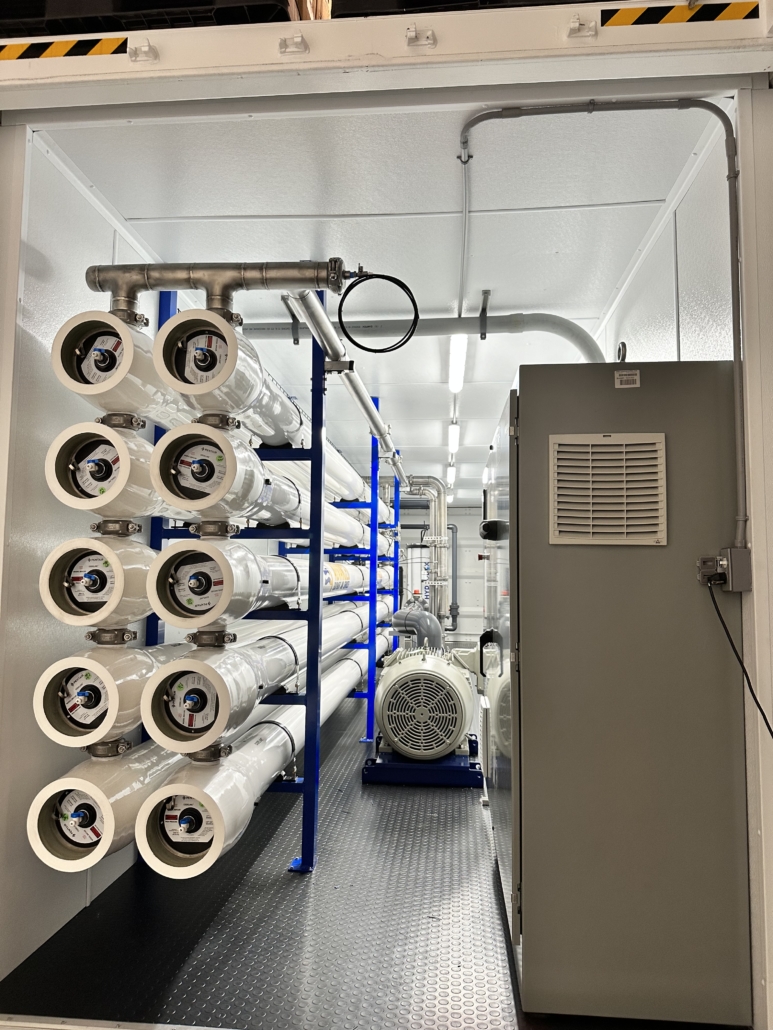
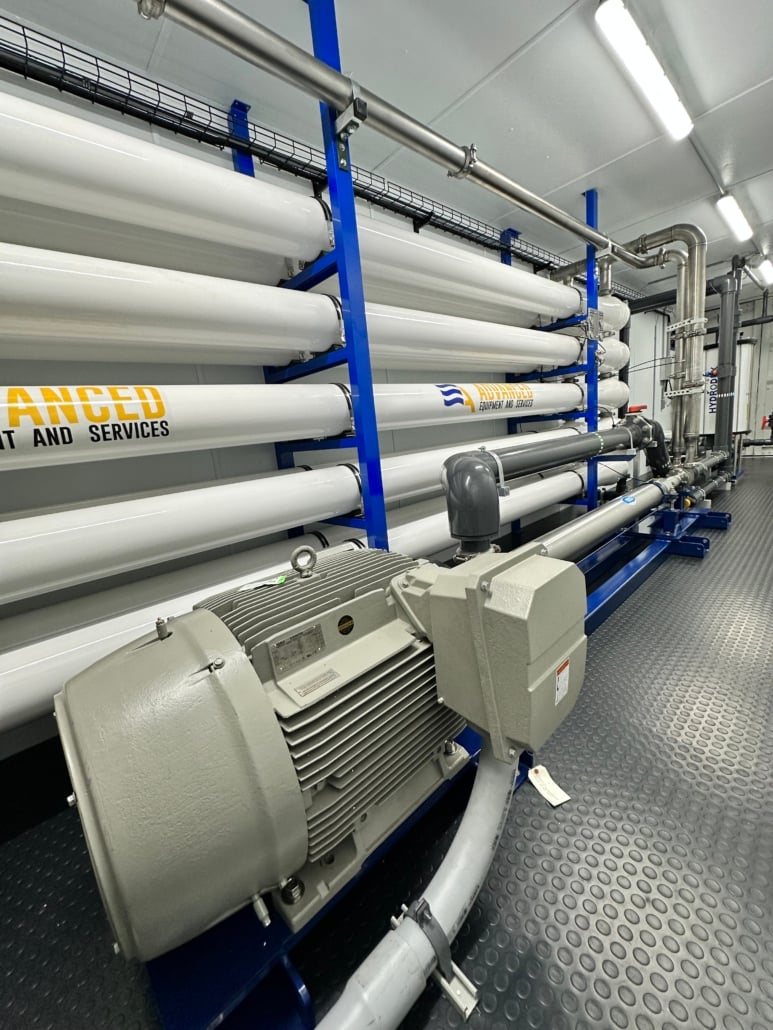
Containerized desalination refers to a reverse osmosis or seawater RO treatment system that is fully integrated, tested, and housed within a standard ISO shipping container before it leaves the factory.

The system typically includes:

  • High-pressure pumps
  • Reverse osmosis membrane arrays
  • Pretreatment equipment
  • Control panels and monitoring systems
  • Product water storage connections

Every component is installed, commissioned, and verified inside the container before delivery.

This distinction matters enormously in a humanitarian response context. A system that arrives as a collection of components requiring on-site assembly, pipework fabrication, and specialist commissioning is not a rapid deployment solution. It is a construction project in a disaster zone.

A factory-tested containerized desalination system for humanitarian response arrives ready to produce water. Connect it to a seawater or brackish water feed source, connect it to a power supply, and the system can begin operating.

This means:

  • No on-site assembly
  • No civil works
  • No pipework fabrication
  • No permanent installation
  • No large specialist engineering team required for setup

The ADVANCEES ARKQUA containerized RO and seawater desalination systems are built to this standard. Every unit leaves the ADVANCEES facility tested and verified. Every unit arrives at the deployment site ready to run.

How Many People Can a Containerized Desalination System Serve?

Daily water output requirements for humanitarian response are calculated on a per-person basis. The Sphere Handbook, the established standard for humanitarian minimum requirements, sets a minimum of 15 liters per person per day for basic survival needs, including drinking, cooking, and basic hygiene.

For a more comprehensive humanitarian response that includes sanitation, medical facilities, and food preparation, daily per-person requirements typically rise to 35 to 50 liters.

Using these benchmarks, the population a containerized desalination system can serve depends directly on its daily output capacity:

  • 5,000 GPD: Approximately 19,000 liters per day, enough to meet basic survival needs for up to 1,200 people or more comprehensive needs for approximately 380 to 540 people.
  • 10,000 GPD: Approximately 37,900 liters per day, enough to meet basic needs for up to 2,500 people or more comprehensive needs for approximately 750 to 1,000 people.
  • 50,000 GPD: Approximately 189,000 liters per day, enough to meet basic needs for up to 12,600 people or more comprehensive needs for approximately 3,800 to 5,400 people.

For larger affected populations, multiple ARKQUA units can be deployed in parallel at a central distribution point or positioned across several sites within the affected area. This allows total daily output to scale with the response requirement without major additional infrastructure investment.

The ADVANCEES seawater desalination range includes multiple output capacities within this operational spectrum. Matching the right capacity to the specific population being served is a critical step in the procurement process, and ADVANCEES engineers can assist before deployment is finalized.

Why In-Stock Availability Is the Critical Differentiator

In humanitarian response, the difference between a system that is available immediately and one that requires a production lead time is measured by the number of days a population goes without safe water.

Waterborne disease outbreaks, including cholera, typhoid, and hepatitis A, can develop within days when a population is forced to rely on contaminated water sources. The WHO estimates that diarrheal diseases, many of which are waterborne, kill approximately 1.6 million people annually, with the highest concentration of deaths occurring in post-disaster and low-income settings.

Manufacturing lead times for custom water treatment systems typically range from 8 to 16 weeks under normal production conditions. In the weeks following a major disaster, supply chain disruptions, port closures, and freight congestion can extend those timelines even further.

For response organizations planning a deployment several months after an event, a manufactured-to-order system may still arrive in time to be useful. For organizations responding to an acute crisis in the first days and weeks, it will not.

ADVANCEES ARKQUA containerized desalination systems are available in stock for immediate deployment. Learn more about ARKQUA 200 and ARKQUA 500 rental and leasing options.

For humanitarian response coordinators who need to confirm availability and begin dispatch within 24 to 48 hours of a procurement decision, in-stock status is not simply a preference. It is the primary selection criterion.

Operational Simplicity in Field Conditions

Humanitarian field environments impose operational constraints that standard commercial water treatment systems are not designed to accommodate. Field teams are typically multidisciplinary and may be managing medical care, logistics, community engagement, distribution, and protection functions at the same time.

Dedicating trained personnel exclusively to water treatment system operation is rarely practical.

ARKQUA systems are designed for straightforward operation by personnel without specialist water treatment backgrounds. Automatic controls manage the treatment process continuously and monitor:

  • Feed water quality
  • System pressure
  • Permeate output
  • Operating conditions

Under normal conditions, the system does not require constant manual adjustment. Routine maintenance tasks, including filter replacement and basic cleaning, are straightforward and clearly documented for field operators.

For response organizations requiring remote technical assistance, ADVANCEES can provide remote monitoring support. This allows engineers to observe system performance and guide field teams through operational adjustments without requiring an on-site technical visit.

Leasing and Flexible Procurement for Humanitarian Budgets

Humanitarian response funding operates through approval processes, donor requirements, and budget structures that do not always align with traditional capital procurement timelines.

For organizations working within UN cluster funding frameworks, bilateral donor grants, or emergency pooled funds, accessing a fully operational containerized desalination system through a lease or rental arrangement provides a more flexible path to rapid deployment.

ADVANCEES leasing and rental options for water treatment systems allow response organizations to access in-stock ARKQUA units through a structured monthly payment model. Maintenance support can also be included, removing the need for a large upfront capital commitment.

For procurement officers operating within humanitarian funding constraints, this structure removes the capital barrier to deploying the right system at the right time.

The Window Between Disaster and Disease Is Measured in Days

Every humanitarian response organization that has operated in the field after a major disaster understands that the window between the event and the onset of waterborne disease is short.

Venezuela’s situation, compounded by years of infrastructure deterioration and accelerated by the June 2026 earthquakes, is an extreme example of a risk that exists at every coastal and island disaster site.

A containerized desalination system for humanitarian response that is in stock, fast to deploy, simple to operate, and available in the right capacity is not merely a logistical convenience. It can determine whether clean water reaches an affected population in time.

Contact ADVANCEES today to confirm current ARKQUA stock availability, discuss system capacity options for your deployment, and explore leasing or procurement structures that fit your organization’s funding framework.
HOSPITALITY

Turning Seawater into Sustainability: Containerized RO Plant Supports Land Development and Golf Course in the Bahamas”

Project Summary:

A high-capacity containerized reverse osmosis (RO) desalination plant with a production capacity of 946 m³/day was installed in the Bahamas to supply potable water for a land development and an adjacent golf course. The system, fully pre-assembled inside a container, ensures quick deployment and minimal on-site construction. Designed for efficiency and durability in coastal environments, it delivers a constant supply of fresh water from seawater, supporting both residential needs and the high irrigation demands of the golf facilities.

Full Case Study – Containerized RO Plant in the Bahamas

Client & Location

Bahamas – Coastal high-scale community with integrated golf course facilities.

Challenge

The Land development had a pressing need for a reliable, high-quality freshwater source to support both resort consumption and the substantial irrigation demands of its golf course. Importing water or relying on limited groundwater was not sustainable, and the coastal location required a desalination solution capable of withstanding harsh marine conditions.

Solution

Advanced Equipment and Services delivered a 946 m³/day containerized reverse osmosis desalination plant. The system was pre-engineered and pre-assembled in a secure, transportable container to minimize installation time and site preparation.

Key features include:

  • High-efficiency RO membranes for optimal seawater desalination.
  • Multimedia filtration for pre-treatment, ensuring long membrane life.
  • Integrated pumping systems for reliable operation.
  • Compact, modular layout allowing for rapid deployment and easy scalability.
  • Corrosion-resistant materials suited for tropical, marine environments.

Operation

The plant extracts seawater, processes it through multimedia filters and high-pressure RO membranes, and produces 946 m³/day of potable water. This water is distributed for domestic use within the resort and for irrigation of the golf course greens, ensuring year-round availability of fresh water.

Results & Benefits

  • Reliable Freshwater Supply: Continuous, on-demand potable water for residents.
  • Irrigation Efficiency: Adequate, high-quality water for golf course maintenance without relying on rainfall.
  • Quick Installation: Containerized design allowed for minimal civil works and rapid commissioning.
  • Sustainability: Reduces dependency on imported water and preserves local aquifers.
  • Adaptability: Modular system can be expanded as the community grows.

ARKQUA1000 – BAHAMAS PROJECT VIDEO HERE

ARKQUA1000 – LEARN MORE

WhatsApp
Email
Facebook
Twitter
LinkedIn

Water treatment facilities require efficient, scalable, and reliable reverse osmosis (RO) systems to meet their purification demands. Among the most commonly used configurations are skid-mounted RO plants and containerized RO systems. Each option offers unique benefits depending on operational needs, space availability, mobility, and environmental conditions.

This guide explores the differences between skid plants vs. containerized RO systems, helping businesses and industries determine the best solution for their water treatment requirements.


What Are RO Skid Plants?

RO skid plants are modular reverse osmosis systems built on a compact, open-frame skid that houses key components such as pumps, membranes, and control panels. These systems are pre-assembled and tested before installation, allowing for easy integration into an existing facility.


Key Features of Skid-Mounted RO Plants

  • Fully pre-engineered and assembled for plug-and-play installation
  • Open-frame design allows for easy access to components for maintenance
  • Can be integrated into existing infrastructure with minimal modifications
  • Available in customizable sizes to meet different production capacities
  • Ideal for facilities with permanent water treatment needs


Advantages of RO Skid Plants

  1. Cost-Effective Installation – Since the system arrives pre-assembled, installation costs and setup time are reduced.
  2. Customizable – Can be designed to fit specific flow rates and water treatment needs.
  3. Easier Maintenance – Open-frame design allows for quick access to components for servicing and repairs.
  4. Scalability – Additional skid units can be installed as water demand grows.


Best Applications for RO Skid Plants

  • Industrial and manufacturing facilities with fixed installation space
  • Municipal water treatment plants requiring large-scale water purification
  • Agricultural irrigation systems needing consistent and high-capacity water supply
  • Power plants and refineries requiring specialized water filtration


What Are Containerized RO Systems?

Containerized RO systems are self-contained water treatment plants built inside a standard ISO shipping container. These units include all necessary components, such as filtration systems, pumps, and electrical panels, making them a fully mobile and turnkey solution.


Key Features of Containerized RO Systems

  • Housed inside 20-ft or 40-ft containers for easy transportation and deployment
  • Pre-assembled and pre-tested to minimize setup time
  • Equipped with climate control, insulation, and protective casing for harsh environments
  • Designed for remote locations, emergency water supply, and temporary projects
  • Can be configured with solar panels for off-grid operation


Advantages of Containerized RO Systems

  1. Portability – Can be relocated as needed, making it ideal for temporary or mobile applications.
  2. Minimal On-Site Installation – Systems arrive fully enclosed and ready to operate, reducing installation time.
  3. Weather Protection – Built to withstand extreme climates, ensuring durability in remote locations.
  4. Rapid Deployment – Ideal for disaster relief, military applications, and emergency water supply.


Best Applications for Containerized RO Systems


Skid Plants vs. Containerized RO Systems: Which One Is Right for You?

When choosing between skid-mounted RO plants and containerized RO systems, it’s essential to consider factors such as mobility, installation environment, and operational flexibility.

Factor RO Skid Plants Containerized RO Systems
Mobility Fixed installation, not easily movable Fully mobile, can be relocated as needed
Installation Requires integration into an existing facility Arrives pre-assembled and ready for quick deployment
Maintenance Access Open-frame design for easy servicing Enclosed system with protected components
Weather Resistance Requires an indoor or covered area Fully enclosed and weather-resistant
Use Case Permanent facilities with high water demands Remote sites, emergency relief, or mobile applications
Customization Fully customizable to fit facility needs Standardized container sizes with optional add-ons


Final Considerations: Making the Right Choice

  • Choose RO skid plants if:
    • You need a long-term water treatment solution at a fixed location
    • Your facility has existing infrastructure for integration
    • Custom configuration is essential for your water treatment needs
    • Easy maintenance access is a priority
  • Choose containerized RO systems if:
    • You need a portable and rapidly deployable water treatment unit
    • Your operation is off-grid or in a remote location
    • You require climate-controlled and weather-resistant protection
    • Quick setup and minimal on-site construction are necessary
Both skid-mounted and containerized RO systems offer efficient and reliable water treatment, but selecting the best option depends on your industry’s specific needs, mobility requirements, and infrastructure limitations.
For expert guidance on selecting the right RO system, contact ADVANCEES today to discuss your project requirements and explore our custom water treatment solutions.

The need for efficient water treatment solutions has driven innovations in reverse osmosis (RO) technology. Among these innovations, containerized reverse osmosis systems have gained prominence for their versatility and numerous advantages over traditional industrial RO systems. As a pioneer in this field, ADVANCED Equipment and Services has developed ARKQUA® which offers a variety of RO containerized solutions with five key benefits that make containerized RO systems a compelling choice.

1. Quick and Easy Installation

One of the primary advantages of a containerized reverse osmosis system is its “plug and play” characteristic. These systems are pre-engineered, pre-assembled, and integrated into shipping containers, providing a compact and self-contained unit. Including a built-in multimedia filtration pretreatment system prepares the water before it undergoes the RO process; this turnkey approach significantly reduces on-site installation time and costs, allowing for faster deployment of water treatment solutions, and its compact design maximizes space efficiency.

2. Scalability and Modularity

Containerized RO systems offer scalability to meet varying water treatment demands. The modular nature of these systems allows for easy expansion by adding more containers as the water treatment needs increase. This scalability feature makes containerized RO systems adaptable to small-scale and large-scale applications, providing a flexible and cost-effective solution for industries with evolving water treatment requirements.  

These systems are also inherently flexible and modular, allowing customization for specific water treatment needs. The modular design facilitates the integration of additional water treatment components or technologies, such as ultraviolet (UV) disinfection and advanced monitoring systems. This adaptability makes containerized RO systems versatile in addressing diverse water quality challenges and complying with stringent regulatory requirements. 

3. Mobility / Portability

Containerized RO systems offer mobility and portability that traditional systems cannot match. These units can be easily transported to different locations, making them ideal for temporary projects, emergency response situations, or remote sites without permanent infrastructure. Industries with changing operational sites or those involved in disaster relief efforts find the portability of containerized RO systems invaluable. The ability to deploy a fully functional water treatment facility on short notice enhances the responsiveness of organizations facing dynamic water challenges.

4. User-friendly Maintenance and Operation

Maintenance and operation of traditional RO systems can be complex and require skilled personnel. Containerized RO systems are designed with user-friendly maintenance and operation in mind. The integrated components are easily accessible–facilitating routine inspections, maintenance, and repairs. Additionally, these systems often come equipped with advanced monitoring and control systems that simplify monitoring and operation. The streamlined maintenance procedures contribute to overall system reliability and longevity.

5. Built-In Climate Control

Maintaining optimal operating conditions is crucial for the efficiency of reverse osmosis systems. It is possible to equip containerized RO units with built-in climate control systems that regulate temperature and humidity inside the container. This feature is especially beneficial in regions with extreme weather conditions, ensuring that the RO system operates within the specified parameters for optimal performance and longevity.

Containerized RO Products

Containerized reverse osmosis systems offer various benefits that address the evolving needs of industries requiring efficient and reliable water treatment solutions. Compared to traditional industrial RO systems, containerized units provide a cost-effective, efficient, and versatile solution for industries and organizations seeking reliable water treatment options. With the expertise of companies like AES Inc., the integration of containerized RO technology becomes a strategic investment in sustainable and effective water management. Call today to learn more about our containerized RO products!.