
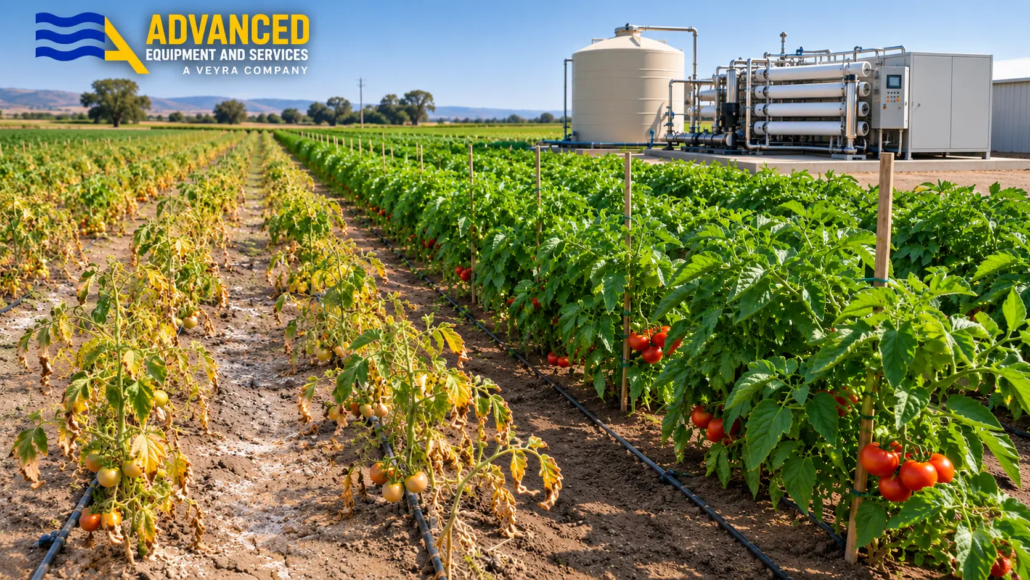
Most agricultural operations focus on what they put into the soil. Fertilizers, seed selection, and planting schedules get careful attention. However, the water going into the ground through your irrigation system often gets overlooked entirely. Poor irrigation water quality causes cumulative damage to your crops and soil that builds season after season, and many operations do not recognize the problem until yields have already declined.
Investing in the right irrigation water treatment systems is one of the most impactful decisions a modern agricultural operation can make.
What Poor Irrigation Water Does to Your Soil
Water carries more than hydration to your fields. Depending on the source, groundwater and surface water can contain high levels of dissolved salts, sodium, calcium bicarbonate, iron, and other minerals. Over time, these contaminants accumulate in the soil profile.
High sodium content is particularly destructive. Sodium breaks down soil structure, reducing pore space and limiting drainage. The result is compacted, waterlogged soil that restricts root development and lowers oxygen availability. Crops struggle to establish root systems, nutrient uptake slows, and yields drop.
Elevated bicarbonate levels can raise soil pH over time, limiting the availability of key nutrients like iron, zinc, and manganese even when those nutrients are present in the soil.
High TDS water also creates osmotic stress, forcing plant roots to work harder to absorb water even when the soil appears moist.
The Damage Builds Quietly, Season After Season
This is what makes irrigation water quality such a persistent problem. The effects are rarely dramatic in year one. Instead, the damage accumulates gradually.
Common signs of declining soil and irrigation water quality include:
- Gradually increasing soil salinity
- Changes in soil pH and nutrient availability
- Reduced drainage and soil permeability
- Restricted root development
- Declining crop health and agricultural yields
By the time most operations notice a meaningful drop in yield or crop health, years of soil degradation may have already occurred.
Reversing compacted, salt-laden soil is expensive and time-consuming. Prevention through proper water treatment is often far more cost-effective than remediation.
How Irrigation Water Treatment Systems Address the Problem
Modern irrigation water treatment systems remove contaminants that cause long-term soil and crop damage before the water reaches your fields.
Reverse osmosis is one of the most effective technologies for agricultural water treatment. It removes dissolved salts, sodium, bicarbonates, and other minerals at high efficiency, delivering clean, consistent water that protects soil structure and supports healthy root development.
For smaller operations or remote irrigated acreage, a compact brackish water RO system offers a scalable, low-footprint solution. These systems handle common groundwater contaminants found in agricultural regions, including high TDS and sodium, without requiring a large permanent infrastructure investment.
Explore ADVANCEES SBWRO Series brackish water reverse osmosis systems for compact agricultural water treatment applications.
Pre-treatment components such as multimedia filters and sediment filtration also play an important role. They remove suspended solids and turbidity before water reaches the RO membrane, helping extend system life and maintain consistent water quality throughout the season.
Learn more about ADVANCEES pre-treatment and post-treatment solutions for industrial and agricultural water purification.
Choosing the Right System for Your Operation
The right irrigation water treatment system depends on your water source, the volume you irrigate, and the specific contaminants in your supply.
A water quality analysis is the starting point. Important considerations include:
- Water source: Groundwater, surface water, or municipal supply
- Water quality: TDS, sodium, hardness, bicarbonates, and other contaminants
- Irrigation demand: Daily water volume and seasonal requirements
- Crop sensitivity: Tolerance to salinity and specific minerals
- System capacity: Treatment flow rate and potential expansion needs
Operations sourcing from wells, rivers, or municipal supplies each face different water chemistry challenges. A system designed around your actual water profile will protect your soil and crops far more effectively than a generic filtration setup.
Protect Your Soil Investment Before the Next Planting Season
November is a good time to evaluate your irrigation water quality and plan treatment infrastructure for spring. The damage from poor water quality can compound every year you delay.
Contact ADVANCEES today to discuss irrigation water treatment systems sized and specified for your agricultural operation.


 ADVANCEES

