
Why TDS Rejection Rate Is the Only Metric That Matters at the Decision Stage
- Water softeners: Remove only hardness ions. Does not reduce overall TDS. The rejection rate for total dissolved solids is effectively zero.
- Activated carbon filtration: Removes chlorine, organics, and some trace compounds. No meaningful TDS rejection.
- Nanofiltration: Rejects divalent ions at approximately 80 to 95 percent. Allows monovalent ions, including sodium and chloride, to pass through. Insufficient for high-TDS source water above 1,000 ppm.
- Chemical deionization: Achieves near-complete ion removal but relies on continuous chemical regeneration. Cost-prohibitive at high TDS concentrations and large volumes.
- Reverse osmosis: Rejects up to 99 percent of total dissolved solids across the full range of commercial and industrial TDS concentrations. Scalable, continuous, and cost-effective at volume.
For source water with 500-12,000 ppm TDS, which covers the majority of commercial and industrial brackish water applications in the United States, reverse osmosis is the only technology that consistently delivers output within acceptable quality thresholds for process water, boiler feed, food-grade applications, and cooling systems.
How Reverse Osmosis Works at an Industrial Scale
Reverse osmosis uses hydraulic pressure to force water through a semipermeable membrane. The membrane allows water molecules to pass while rejecting dissolved salts, minerals, metals, and organic compounds. The result is two output streams: high-purity permeate water and a concentrated brine stream that carries the rejected solids away from the system.
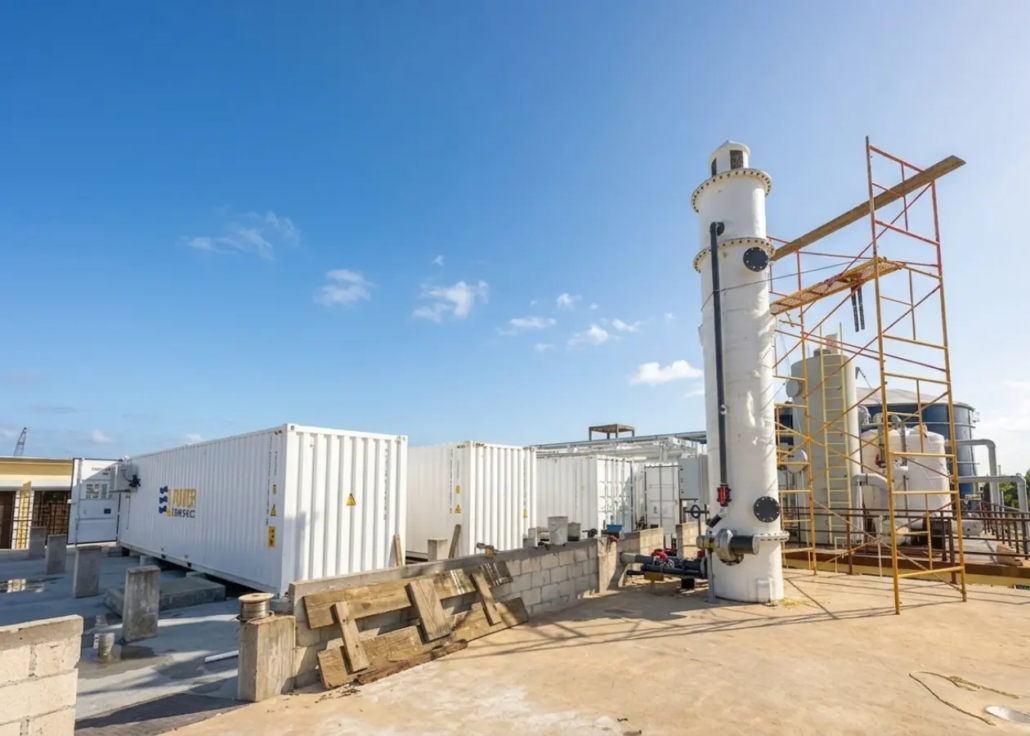
At an industrial scale, RO systems operate continuously, with automated controls managing feed pressure, flow rates, and membrane-cleaning cycles. Modern Brackish Water RO Systems are engineered for low maintenance intervention, high uptime, and consistent output quality regardless of seasonal variation in feed water TDS.
Why Membrane Technology Has Advanced Beyond the Alternatives
Membrane manufacturing has improved substantially over the past decade. Current-generation brackish-water membranes operate at lower feed pressures than earlier designs, reducing energy consumption while maintaining high rejection rates. Membrane life has extended, pre-treatment requirements have become better understood, and the total cost of ownership for a well-specified RO system has fallen relative to alternative treatment approaches.
In contrast, chemical deionization costs scale directly with feed water TDS concentration. As source water quality deteriorates, chemical consumption and regeneration frequency increase in proportion, making ongoing operating costs unpredictable and difficult to budget for.
Scalability: Why RO Wins for Growing Industrial Operations
One of the most practical advantages of reverse osmosis for industrial water treatment is scalability. RO systems are modular by design. A facility that installs an SBWRO or MBWRO Series system today can expand capacity by adding membrane elements, pressure vessels, or parallel trains as production demands increase, without replacing the core system infrastructure.
Softeners, carbon filters, and chemical deionization systems do not scale in the same way. Increasing treatment capacity typically requires additional vessels, larger chemical storage, and proportionally higher consumable costs. The capital and operating cost curves for these technologies rise more quickly than RO’s as volume increases.
For industrial operations planning capacity growth over a three- to five-year horizon, the scalability of reverse osmosis is a direct financial advantage that should be included in any technology comparison.
Long-Term Operating Cost: The Case for RO Over the Full Asset Life
Technology comparisons that focus only on capital cost consistently underestimate the true cost of alternatives to reverse osmosis. The relevant comparison is the total cost of ownership over the full system life, typically ten to fifteen years for a well-maintained industrial RO installation.
Over that timeframe, the cost advantages of reverse osmosis compound:
- Energy costs are predictable and decline as feed pressure optimization improves
- Chemical costs are significantly lower than those of continuous deionization regeneration
- Membrane replacement is a scheduled maintenance item with known costs, not a surprise capital event
- Downtime is minimized through automated monitoring and preventive maintenance programs
- Output consistency reduces downstream quality failures and the production losses that accompany them
Selecting the Right Industrial RO System for TDS Reduction
The right system specification depends on your daily flow requirement, feed water TDS concentration, and application-specific output quality targets.
For light commercial and small industrial operations, the ADVANCEES SBWRO Series delivers fully automatic brackish water TDS reduction in a compact skid-mounted configuration.
For mid-range industrial applications with higher daily output requirements, the MBWRO Series provides greater capacity with the same engineering reliability and automatic operation.
Where output quality requirements extend to ultra-low conductivity for pharmaceutical, semiconductor, or high-purity process applications, an RO system paired with electrodeionization delivers continuous polishing without chemical regeneration inputs.
The Decision Is Clearer Than It Appears
When the comparison is made on rejection rate, scalability, and total cost of ownership, reverse osmosis is not one option among several equals. It is the technically and financially superior solution for industrial TDS reduction across the concentration range that most commercial facilities actually face.
The remaining question is the system specification, and that is where getting the engineering right from the start protects your investment throughout the system’s life.
Contact the ADVANCEES engineering team today to discuss your water quality data and flow requirements. Our design and consultancy service ensures your system is correctly specified for your source water, your application, and your long-term operational goals.


 ADVANCEES
