
Farmers in drought-prone regions know that every drop of water counts. When rain is scarce and reservoirs run low, agricultural irrigation filters become unsung heroes of the farm. These filtration systems clean and optimize available water, from river flows to well water and even recycled runoff, so that crops can thrive despite challenging conditions. By improving water efficiency, removing contaminants, and extending the usability of limited water sources, irrigation filters help farmers make the most of every drop during droughts.
Water Scarcity Challenges in Agriculture
Extended droughts in places like California and the Southwest U.S. have made water a critical limiting factor for agriculture. In California’s Central Valley, for instance, farmers depend heavily on irrigation, and water availability is an enduring concern. During severe droughts, surface water deliveries are cut back and farmers turn to groundwater or alternative supplies. This shift can introduce new challenges: well water often carries high mineral content, and surface water from rivers can contain heavy sediment or algae. Using such sources without adequate filtration risks clogging irrigation equipment and harming crops.
Modern irrigation methods like drip irrigation are a lifeline in arid conditions because they use water so efficiently. However, drip systems absolutely require clean, filtered water to function. As agriculture experts note, “Filtration is a crucial component of a successful drip irrigation system… essential for ensuring that drippers work properly and do not get blocked.” If emitters clog due to dirt or algae, precious water won’t reach the plants. Thus, effective filters are not an optional add-on, they’re foundational to keeping water flowing smoothly where it’s needed most.
Beyond protecting irrigation hardware, filtration also allows farmers to use non-traditional water sources safely. With the right filters, river water can be effectively filtered and reused in agriculture, making it suitable for irrigation and even filling livestock troughs. Groundwater from wells, while often a vital backup during drought, can contain dissolved iron, calcium, or other minerals that accumulate in pipes and sprinklers. Without filtration, these minerals would slowly choke equipment and damage soil. Open canals or ponds carry leaves, sediment, and algae that would otherwise clog pumps and nozzles. In short, when clean water is scarce, farmers must turn to whatever is available, and robust filtration systems make those water sources usable by removing the “junk” that would impede irrigation.
Improving Water Efficiency with Filtration
One of the greatest benefits of irrigation filtration is its ability to maximize water efficiency, which is crucial during droughts. By ensuring water is debris-free, filters enable advanced irrigation techniques (like drip and micro-sprinklers) that deliver water with pinpoint precision and minimal waste. Many producers have dramatically cut their water use by upgrading to such efficient systems. In Arizona, for example, widespread adoption of precision irrigation (along with measures such as lined ditches and soil moisture sensors) has reduced agricultural water use from roughly 90% of the state’s supply to about 72%. Clean water is the key to these efficiencies. Without filters, high-tech irrigation would falter under the weight of sediment and biofilm.
Filtration also opens the door to recycling water on the farm, further boosting efficiency. In greenhouse and hydroponic operations, it’s now common to collect, filter, and recirculate irrigation water to be used again for the plants. Instead of letting unused nutrient solution or irrigation runoff go to waste, farmers use filters (often down to very fine 5–40 micron screens) to remove impurities and then pump the water back through the system. This closed-loop approach drastically reduces overall water consumption. Effective filtration is essential in this loop to prevent the buildup of contaminants and keep the recirculated water clean and safe for crops. Even in open-field farming, some growers capture tailwater (runoff) in ponds, filter it to remove sediment and pathogens, and reuse it on their fields. Every gallon reused is a gallon saved, which can make the difference between a harvest and a fallow field in a drought year.
Critically, filtration for efficiency isn’t just about reusing water, it’s also about delivering water more effectively. Filters ensure that drip emitters and sprinkler nozzles stay clear, so that the water you do use is distributed evenly and doesn’t leak or gush from broken lines. Clean water means uniform soil moisture and healthier crops using fewer gallons. It also reduces the downtime and water loss that occur when farmers have to flush out lines or replace clogged components. In short, irrigation filters help every drop of water work harder for the farm.
Safeguarding Crops and Irrigation Systems from Contaminants
Not all water is created equal. During droughts, farmers often must utilize water with higher levels of salts, minerals, or organic contaminants that can harm crops over time. Irrigation filtration acts as a protection layer, shielding both crops and equipment from water-borne threats. The primary function of these filters is to remove contaminants, sediments, and debris from the water before it ever reaches the field. By doing so, filters address problems that could otherwise reduce crop yields or even render land unproductive.
Consider the contaminants that commonly plague agricultural water and how filters help mitigate them:
-
Sediment and Debris: Sand, silt, and organic matter can plug up drip lines and sprinklers, starving sections of a field of water. Filters (using screens, discs, sand media, etc.) trap these particles, preventing clogs and ensuring uniform water flow to every plant.
-
Microbes and Pathogens: Water from ponds or recycled sources may carry bacteria, algae, or other microorganisms. Through fine filtration, and often paired with disinfection steps, farmers remove harmful microbes, protecting crops (and consumers) from diseases. For example, filtering out algae and using self-cleaning screens keeps irrigation lines slime-free and hygienic.
-
Minerals and Salts: In arid regions, salinity buildup is a serious threat to soil health. High Total Dissolved Solids (TDS) in water (like sodium, boron, calcium) can accumulate and stunt crops or even “salinize” fields. Advanced filters, including reverse osmosis (RO) membranes or special media, can strip out excessive salts and minerals. By filtering out salts and harmful minerals, farmers prevent issues like salt burn on plants and long-term soil degradation. Even simpler filtration steps, like sand separators for iron-heavy well water, help by removing particles that would otherwise deposit in soil or on roots.
All of these filtration measures translate into healthier, more robust crops. Clean water promotes better nutrient uptake and prevents toxic buildups that can interfere with plant growth. The benefits have been proven in the field. Almond orchards in California’s Central Valley, for instance, faced recurring droughts and increasingly saline water supplies; yet many sustained and even increased their yields by integrating sophisticated filtration systems. The filters ensured a consistent supply of clean water and even countered soil salinization, preserving the orchard’s health. In other words, filtering out the “bad stuff” in water directly protected those trees from stress and allowed for continued productivity.
Filtration doesn’t just protect plants, it also protects the irrigation infrastructure that delivers water. Clean, filtered water significantly extends the life of irrigation equipment such as pumps, valves, sprinkler heads, and drip tape. Minerals like calcium and iron, if not removed, will crust over emitters and corrode pipes. Sediment can grind on pump impellers and clog filters or valves down the line. By keeping the water clean, filters reduce wear-and-tear on all these components. In fact, maintaining clean water “directly contributes to the longevity of irrigation equipment… translating to economic savings in maintenance and replacements.” Fewer clogs and breakdowns mean less money spent fixing lines and more uptime keeping crops watered. Over a season, that reliability can save a farm both water and money, no small matter when both resources are tight.
Extending the Usability of Water Sources
A major advantage of agricultural irrigation filters is how they enable farmers to tap into a wider range of water sources. In drought conditions, the usual sources (like rainfall and full reservoirs) aren’t sufficient, so farmers become resourceful – pulling water from wherever they can find it, including sources that would be unusable without treatment. Filtration technology makes this possible by turning marginal water into irrigation-grade water.
Surface water (rivers, canals, lakes): Surface sources often carry suspended solids, pollutants, and seasonal contaminants. Through filtration, even murky river or canal water can be transformed into a clear supply for crops. For example, as mentioned earlier, river water can be filtered and reused safely for irrigation and farm use. Many irrigation districts in the Western U.S. use large settling basins and screen filters to treat canal water before it enters farmers’ pipelines. These filters capture leaves, sticks, and silt washed in from upstream, ensuring that what reaches the farm won’t clog drip emitters. By filtering surface water, farmers effectively extend their water budget with supplies that nature provides (even if it’s not pristine). It’s a way of making every stream or canal count.
Groundwater (wells): During droughts, farmers often pump more groundwater to make up for surface water shortfalls. But groundwater quality varies, some aquifers contain troublesome levels of iron, manganese, sulfur, or salts. Irrigation filters and treatment units (like iron removal filters or carbon filters) can take out these elements. For instance, a sand media filter or centrifugal separator can remove iron flakes and sand coming from an aging well. Without such filtration, those wells would foul the irrigation system. Thanks to modern filters, brackish water from shallow wells can even be run through RO systems to remove excess salinity, turning it into a viable irrigation source. ADVANCEES’s agricultural RO solutions, for example, are engineered to handle diverse water sources – from brackish groundwater to surface reservoirs – by integrating membranes with pre-filtration so that farmers get a consistent supply of clean water.
It’s worth noting that in some cutting-edge farming regions, treated wastewater and recycled runoff have become key irrigation sources. What once might have been discarded is now seen as a drought-proof water supply, but only if it’s filtered and treated properly. Recycled water from municipal treatment plants or on-farm waste lagoons can contain everything from nutrients to pathogens. Through multi-stage filtration (sometimes including ultraviolet disinfection and advanced membranes), this water can be brought up to a quality even higher than some surface waters. States like Arizona and California have regulatory standards for using reclaimed wastewater on crops, and many farms are beginning to take advantage of these programs.
In fact, some farmers have found recycled water so beneficial that they prefer it over pumping more groundwater. Treated effluent and greywater reuse can supply ample irrigation volume without further depleting aquifers. After passing through filtration and treatment, such water is not fit for drinking but is perfectly good for irrigation and agriculture. Many farmers in arid regions have even “abandoned subsurface aquifers in favor of these more effective water sources”. In other words, rather than drilling another well, they are tapping into nearby recycled water sources, knowing that a robust filtration system will remove any impurities and make it safe for their crops. This strategy not only preserves groundwater for critical uses but also provides farms with a reliable supply that isn’t dependent on rainfall. It’s a powerful example of how filtration technology can extend the water portfolio available to agriculture.
Real-World Examples of Filtration Resilience
The impact of irrigation filtration isn’t just theoretical, there are many real-world cases where filters have helped farms survive and even thrive in water-scarce conditions. Here are a couple of examples:
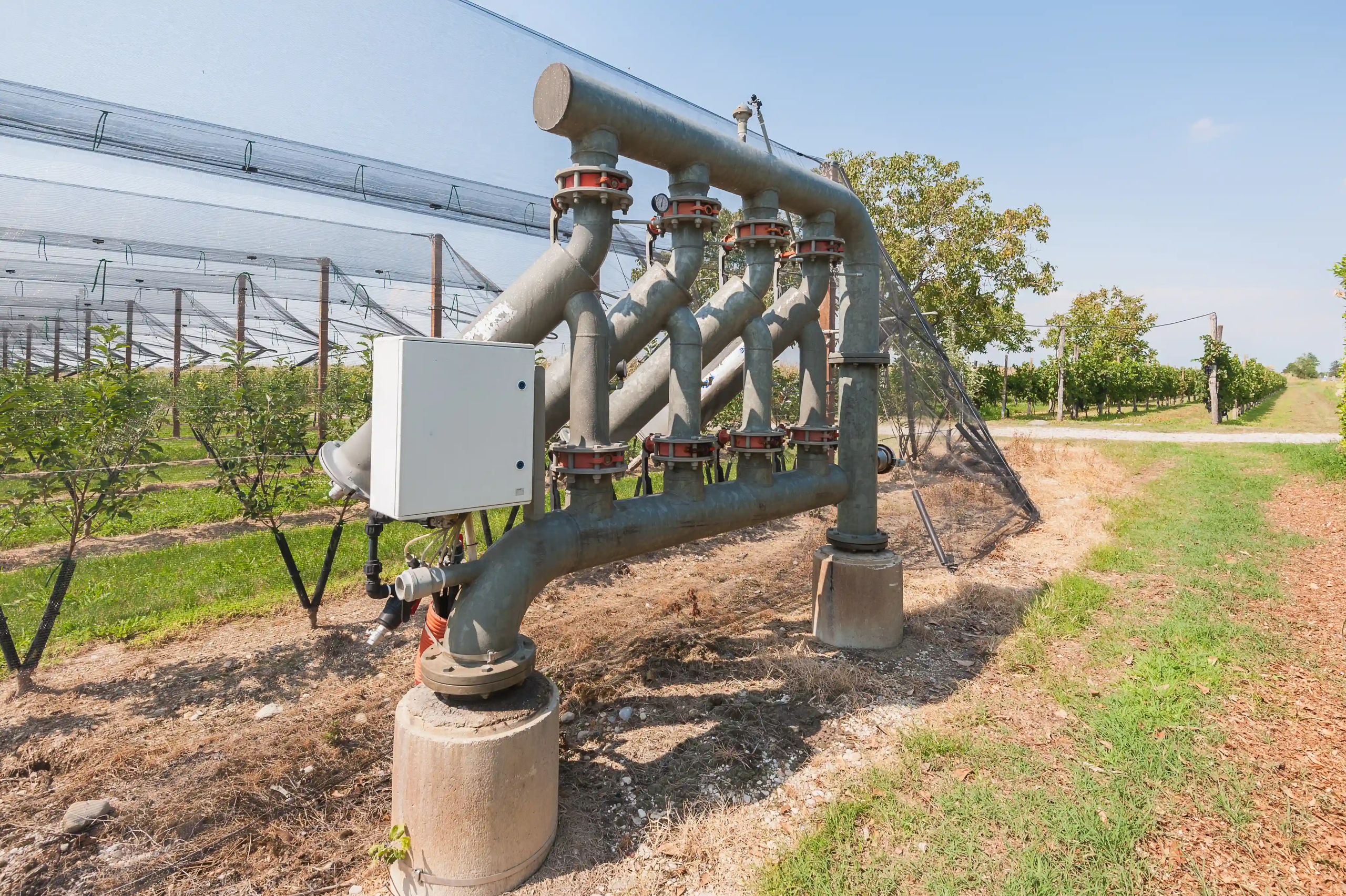
A California farm’s sand media filtration tanks allow groundwater to be used for drip irrigation during drought conditions. This advanced filtration system helped increase tomato yields by delivering clean water efficiently to the crops. In Woodland, California, one tomato farming operation installed a sand media filter and drip irrigation system to cope with an extreme drought. With surface water unavailable, the farm turned to groundwater from a well. The filtration tanks removed sediment and organic matter from the well water, which was then fed through drip lines buried 10 inches below the soil. The results were remarkable: despite the ongoing drought, the farm produced 30–50% greater yield than before, thanks to precise, filtered drip irrigation that delivered water directly to plant roots. The farmer not only saved water (by minimizing losses and targeting irrigation), but also avoided the soil salinity problems that unfiltered well water might have caused. This example shows how the combination of efficient irrigation and proper filtration can significantly boost productivity, even with limited water.
Another example comes from the almond orchards of Central California. Almond trees are notoriously water-intensive and sensitive to salt. During recent drought years, some orchards received only a fraction of their normal surface water allotment, forcing growers to use groundwater that was high in dissolved salts. Those who invested in advanced filtration and treatment saw a clear payoff. In one case, a grower implemented a filtration system with automatic self-cleaning screen filters and auxiliary RO units. According to reports, this orchard sustained and even slightly increased its yields despite the harsh conditions. The filtration ensured that the irrigation water remained low in particulates and salts, thus preventing the gradual soil salinization that would have otherwise stunted the trees. While neighbors without proper water treatment saw their almond yields drop and some trees suffer, the filtered orchards stayed healthy. These kinds of outcomes underscore how vital water quality is to crop success: clean water can mean the difference between a good harvest and a failed one when drought pressures mount.
Real-world success stories aren’t limited to California. Farmers in Israel’s arid Negev desert, for example, transformed their fields by pairing drip irrigation with rigorous filtration and water recycling. What was once barren land is now highly productive farmland, and Israel has become a leading exporter of fresh produce from desert agriculture. Likewise, innovative projects in places like Florida (Water Conserv II) have used reclaimed water for decades to irrigate citrus groves, proving that with proper filtration and management, even wastewater can be turned into a reliable agricultural resource. From Asia to Africa, there are examples of farms using filters to make the most of limited and challenging water supplies.
The common thread in all these stories is that water filtration provides resilience. It gives farmers options, allowing them to safely use water that would otherwise be off-limits or destructive to their land. In a changing climate where droughts are predicted to become more frequent and severe, this resilience will only grow in importance. Filtration is effectively a form of insurance, safeguarding both crop yields and the long-term viability of farmland in the face of water scarcity.
Conclusion
Droughts and water shortages pose an existential challenge to agriculture, but agricultural irrigation filters are proving to be a powerful ally for farmers. By purifying and optimizing scarce water supplies, these systems enable growers to continue raising crops sustainably when nature doesn’t cooperate. In summary, modern filtration solutions help farmers:
-
Conserve Water: by enabling efficient irrigation methods and recycling of runoff, so no water is wasted. Embracing filtration often paves the way for water conservation through reuse, an added benefit especially in water-scarce regions.
-
Protect Crop Health: by removing harmful impurities (sediment, pathogens, excessive salts) from water, thus preventing crop diseases and soil degradation. Clean, filtered water means healthier plants and higher yields.
-
Safeguard Equipment: by preventing sand, grit, and minerals from clogging pumps or drip lines, which extends the lifespan of irrigation infrastructure and reduces downtime and repair costs.
-
Expand Water Sources: by treating water from rivers, wells, or even wastewater so that it becomes usable for irrigation, thereby increasing a farm’s water supply options.
All of these benefits contribute to a more resilient and sustainable farming operation. Instead of being at the mercy of water shortages, farms with robust filtration can adapt by using alternative water sources, maintaining soil health, and delivering just the right amount of clean water to keep crops growing.
The role of irrigation filters in agriculture is ultimately about smart water management. In an era of unpredictable climate patterns and dwindling freshwater reserves, investing in high-quality filtration is not just a technical upgrade but a strategic necessity. Advanced filtration systems (such as those in the ADVANCEES Agriculture & Farming Water Filtration product line) enable farmers to use water with maximum efficiency while protecting their crops and equipment. By doing so, farmers can achieve greater productivity with the water they have, a critical advantage when every drop truly matters.
In the end, agricultural irrigation filters support farmers by turning limited water into an abundant opportunity. They ensure that whether the water comes from a river, a well, or a recycled source, it will be clean and reliable for irrigating our food supply. That reliability empowers farmers to endure droughts, safeguard their livelihoods, and continue feeding communities even under the toughest conditions. With effective filtration, agriculture can advance steadily toward a future of greater drought resilience and water sustainability.


 ADVANCEES