
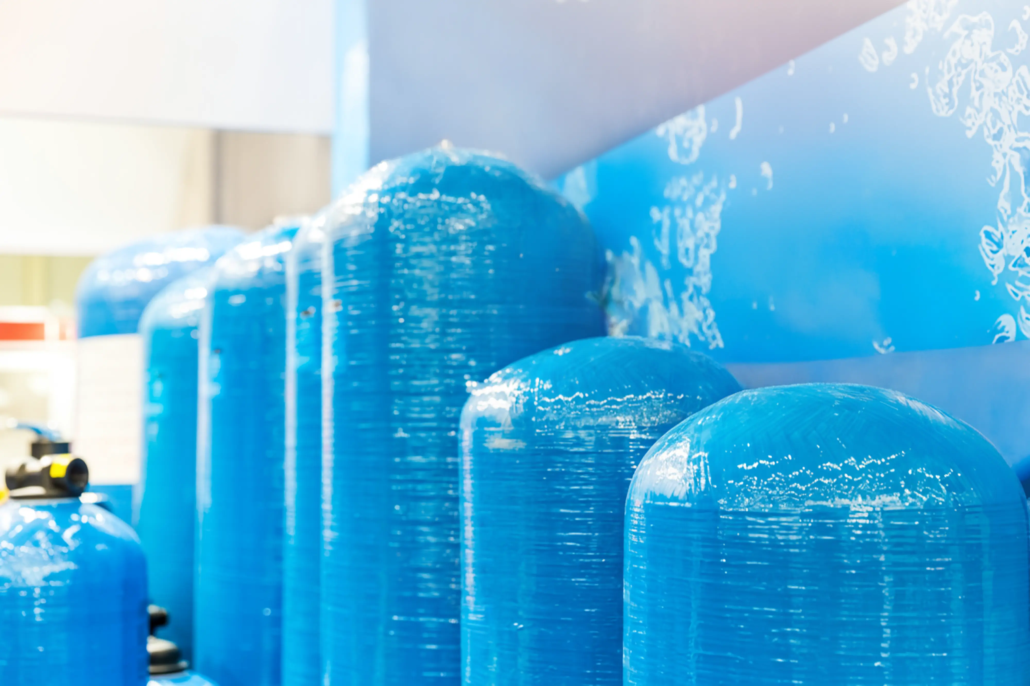
Reverse osmosis (RO) systems are designed to produce high-purity water, but even the most advanced membranes can quickly fail if the incoming water contains hardness minerals like calcium and magnesium. These ions are responsible for scale formation, one of the most destructive and costly problems in industrial RO operations. As industries face higher water purity requirements and rising membrane replacement costs, FRP water softener systems have become essential for protecting RO membranes and maximizing system efficiency.
ADVANCEES’ SO FRP Tanks & Softeners, also referred to as fiberglass reinforced plastic water softeners, provide long-term hardness reduction designed specifically for industrial and commercial water treatment. Their durability, corrosion resistance, and high-capacity performance make them essential within the RO pretreatment train.
Why Hardness Reduction Is Critical for RO Systems
RO membranes are not built to handle hardness minerals. Once calcium or magnesium forms scale on the membrane surface, the system begins to experience:
-
Higher differential pressure
-
Reduced permeate production
-
Increased energy demand
-
Frequent chemical cleaning
-
Shortened membrane life
This is why water softeners for RO membrane protection have become standard across industries where uptime, consistency, and water purity are mission-critical.
Hardness removal is no longer optional, it is a required part of RO pretreatment system components.
Why FRP (Fiberglass Reinforced Plastic) Softeners Are Ideal for Industrial Applications
FRP softeners offer several advantages over steel or epoxy-lined alternatives:
1. Corrosion Resistance
FRP tanks do not rust or corrode, even in harsh chemical environments. This makes them ideal for commercial FRP softener systems operating in demanding industrial conditions.
2. Lightweight and Easier to Install
FRP tanks can be moved effortlessly in mechanical rooms, rooftops, or tight locations, unlike heavy steel vessels.
3. Longer Lifespan
Because FRP resists both chemical and mechanical wear, tanks last significantly longer while requiring less maintenance.
4. Designed for Large-Scale Operations
Industrial FRP water softeners handle high flow rates and fluctuating water demand, making them a perfect fit for RO pretreatment.
How FRP Softeners Work to Protect RO Membranes
FRP ion exchange softeners remove hardness through a sodium-based ion exchange process. As water flows through the resin bed:
-
Calcium ions (Ca²⁺)
-
Magnesium ions (Mg²⁺)
…are replaced with sodium ions. This prevents scale from forming on:
-
RO membranes
-
Pump components
-
Pressure vessels
-
Piping and valves
Key Benefits for RO Performance
-
Lower scaling potential
-
Longer membrane life
-
Stable operating pressure
-
Less frequent chemical cleaning
-
Improved permeate quality
-
Lower overall operating costs
This is why many facilities now consider hardness removal for RO one of the highest-impact cost-saving measures.
Where FRP Softeners Fit in the RO Pretreatment Sequence
To understand the role of FRP softeners, it’s helpful to look at how they integrate into the full RO treatment train.
STEP 1: Multimedia Filtration (MMF)
Before softening, suspended solids must be removed to protect the resin bed.
STEP 2: FRP Water Softener System
Removes hardness, prevents scale, and protects RO membranes.
STEP 3: Cartridge Filtration
Final polishing to remove fine particulates.
STEP 4: Pump Skid System
After pretreatment, water moves into the high-pressure pump skid, which drives the RO membranes.
STEP 5: Reverse Osmosis Membranes
The core separation process occurs here.
STEP 6: UV Disinfection (Optional)
For applications requiring biological control, Ultraviolet Water Treatment ensures post-membrane water safety.
This sequencing ensures the softener performs its role effectively and extends membrane life.
How FRP Softeners Help Reduce RO Membrane Replacement Costs
Membranes are one of the most expensive components in an RO system. Facilities often replace membranes every 2–3 years, but with proper softening, membranes can last significantly longer.
Softeners reduce costs by:
-
Preventing scale buildup
-
Reducing chemical cleaning frequency
-
Maintaining stable permeate flow
-
Preventing pump and piping damage
-
Reducing downtime due to membrane failure
In many facilities, adding an FRP softener extends membrane lifespan by 30–50%, producing a dramatic reduction in operating expenses.
Monitoring and Automation for FRP Softeners
Modern industrial operations often automate softener regeneration and monitoring. Facilities integrating softeners with automated control systems benefit from:
-
Timed or metered regeneration cycles
-
Flow-based activation
-
Alarms for resin exhaustion
-
Remote monitoring capabilities
-
Integration with pump and RO system controls
This enhances reliability and lowers operator workload.
Industries That Rely on FRP Water Softeners
FRP softeners are used across industries where hardness reduction is essential, including:
-
Food and beverage production
-
Breweries and distilleries
-
Industrial manufacturing
-
Hotels and commercial facilities
-
Cooling tower applications
-
Boiler feedwater
-
Pharmaceuticals and bioprocessing
-
Agriculture and hydroponics
Wherever scale is a risk, FRP softeners are a critical safeguard for RO systems.
Final Thoughts: FRP Softeners Are a Small Investment with a Major Impact on RO Lifespan
Scaling is one of the top causes of membrane failure in industrial RO systems. By removing hardness minerals before they reach the RO membranes, FRP water softeners significantly extend membrane life, improve system efficiency, and reduce long-term operating costs.
As water quality demands continue to rise, softeners are no longer optional, they are a foundational part of protecting RO infrastructure. With durable FRP construction and engineered performance, Advancees softeners help ensure stable, high-quality water treatment for years to come.


 ADVANCEES
