
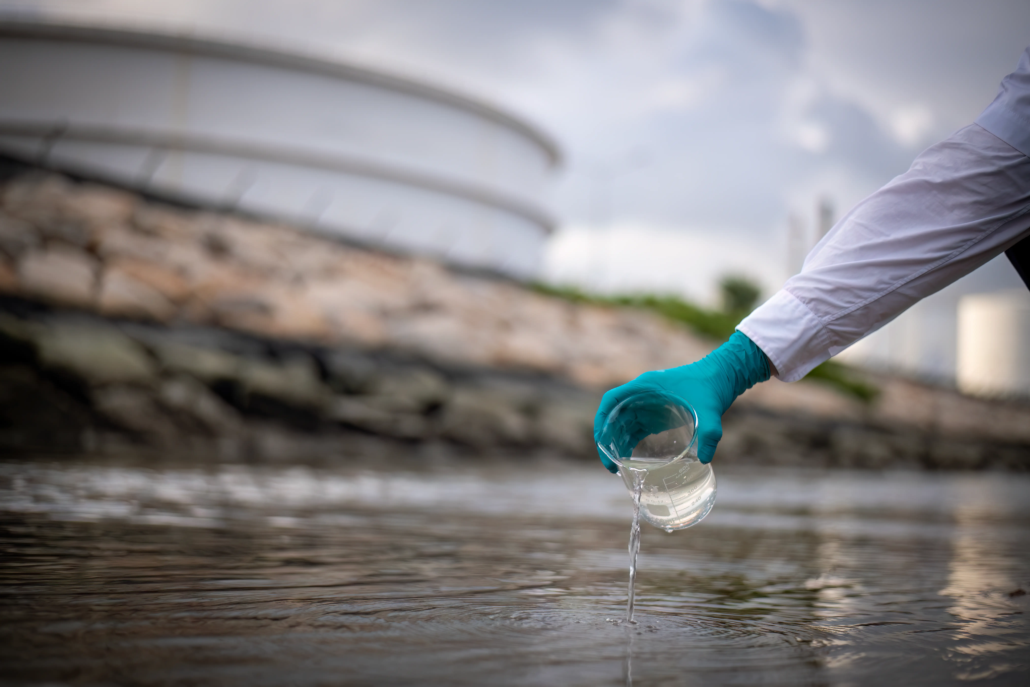
When a flood event hits, most people focus on the visible damage: destroyed roads, flooded buildings, and displaced families. What gets far less attention is the invisible crisis that follows every major flooding event, the one that does not make the front page but forces commercial operations to shut down, sometimes for weeks.
Following the catastrophic Kona Low storms that devastated Hawaii’s North Shore in March 2026, the Honolulu Board of Water Supply issued a boil water notice for all water users from Mokuleia to Turtle Bay, citing potential damage to the water system and urging residents not to drink tap water without boiling it first. The Chief Engineer of the Board of Water Supply confirmed that damaged and destroyed homes had possibly leached sewage into floodwaters, making the contamination risk real and immediate.
A boil water notice is the official response to a public health threat. However, for commercial facilities, resorts, food processors, aquaculture operations, and industrial sites, a boil water notice is not a solution. It is a signal that your water supply has been compromised at a level that your current infrastructure cannot resolve quickly enough to keep operations running.
That signal demands a serious response. And for most commercial operations, that response starts with understanding what a boil water notice actually means, and what boil water notice commercial facility water treatment solutions are available to restore safe operations fast.
What a Boil Water Notice Actually Tells You
Most facility managers treat a boil water notice as a temporary inconvenience. Boil the water, wait for the all-clear, resume normal operations. That approach works for a household. It does not work for a commercial facility with daily water demands measured in thousands of gallons.
The deeper issue is what the notice represents. Municipal water systems issue boil water notices when they cannot verify that treated water leaving the system meets safety thresholds for bacterial contamination. That happens when:
- Flood events overwhelm treatment capacity
- Distribution infrastructure is physically damaged
- Contaminated surface water infiltrates the supply network
A boil water notice remained in effect for North Shore water users even after floodwaters began receding, as the Honolulu Board of Water Supply worked to assess damage and restore safe supply. That timeline, days or weeks of uncertainty, is operationally unacceptable for any facility that depends on a consistent, verified water supply to function.
Boiling water kills bacteria. However, it does not remove:
- Dissolved solids
- Heavy metals
- Agricultural chemicals
- Sewage byproducts
- Sediment and debris deposited during flooding
A facility relying on boiled tap water during a contamination event is managing risk, not eliminating it.
Why Standard Municipal Treatment Cannot Keep Up
Municipal water treatment systems are engineered for normal operating conditions. They are sized, staffed, and equipped to treat a predictable daily volume of water within expected contamination parameters.
A major flood event breaks every one of those parameters simultaneously. Contamination loads spike far beyond normal ranges. Infrastructure sustains physical damage that takes time to assess and repair. Treatment chemicals deplete faster than supply chains can restock them. Operator teams are stretched thin managing emergency response across multiple system failures at once.
Water tankers were stationed at Waialua Community Association and Sunset Beach Neighborhood Park to provide clean water to North Shore residents who could not boil their own supply, a clear indicator that the municipal system could not meet demand even for basic residential use. Commercial facilities cannot rely on emergency tanker distribution to sustain daily operations.
The contamination profile that follows a flood event typically includes:
- Elevated total dissolved solids (TDS)
- Bacterial load well above safe thresholds
- Agricultural and chemical runoff from inundated land
- Sewage infiltration from damaged lines
- Saltwater intrusion in coastal areas where flood events push ocean water into groundwater systems
Standard municipal chlorination addresses some of these issues. It does not address all of them. And it operates on a timeline measured in days or weeks, not hours.
What Commercial Facilities Actually Need After a Flood
The gap between what a boil water notice permits and what a commercial facility requires is significant. A food processing operation needs water that meets specific microbiological and chemical standards, consistently, every day, regardless of what the municipal system is doing. A resort needs to protect guest health and maintain operational credibility. An aquaculture facility needs precise water quality control or it risks losing its entire stock.
For these operations, the right response to a boil water notice is not to wait for the municipal system to recover. It is to deploy on-site water treatment that operates independently of municipal supply and produces verified, treated water at the volume and quality the facility requires.
This is where the ADVANCEES SBWRO Small Brackish Water Reverse Osmosis Series becomes the practical solution. Designed for water sources with up to 12,000 ppm TDS, the SBWRO Series handles the elevated contamination levels that follow a flooding event, treating on-site groundwater or alternative source water to produce high-purity output without dependency on a compromised municipal system.
For coastal facilities where saltwater intrusion has pushed TDS levels beyond the brackish range, the ADVANCEES SSWRO Small Seawater Reverse Osmosis Series handles feed water at full seawater concentrations. Both series are skid-mounted, compact, and engineered for rapid deployment in locations where infrastructure has been disrupted.
Leased Water Treatment Systems for Boil Water Notice Response
One of the most common objections operations managers raise when considering on-site water treatment is timing. A capital purchase takes weeks or months from decision to deployment. A flood event does not offer that timeline.
A leased or rental RO system solves the timing problem directly. Rather than committing to a capital purchase under crisis conditions, a leased water treatment system can be contracted, delivered, and operational in days. The monthly cost converts what would otherwise be a major CAPEX decision into a predictable operating expense, with maintenance, monitoring, and compliance support bundled into the agreement.
For operations dealing with a boil water notice for the first time, this approach also removes the burden of in-house expertise. ADVANCEES engineers:
- Size the system to your facility’s daily flow requirement
- Commission it on site
- Provide ongoing support through a managed maintenance plan
Your team operates it. ADVANCEES keeps it performing.
For short-term contamination events where the municipal supply is expected to recover within a defined window, a rental RO system provides the same protection without a long-term commitment. The system is deployed for the duration of the event and removed when normal supply is restored. For operations that experience recurring boil water notices due to aging local infrastructure, a longer-term lease converts a recurring operational risk into a permanently managed asset.
Boil Water Notices Are Becoming More Common, Not Less
Officials described the Hawaii flooding as a wake-up call, with warnings that storms of this intensity could become more frequent in the future. That assessment applies far beyond Hawaii. Aging water infrastructure across the United States is increasingly unable to handle the contamination loads that extreme weather events produce, and boil water notices are being issued with greater frequency in communities that have never experienced them before.
For commercial facilities in flood-prone regions, coastal areas, agricultural zones, or anywhere that depends on aging municipal infrastructure, a boil water notice is not a rare exception. It is an increasingly predictable operational risk that demands a permanent, deployable response.
The facilities that recover fastest from contamination events are the ones that already have a plan in place before the notice is issued. That plan starts with a conversation with ADVANCEES about your water source, your daily volume requirements, and the right system to protect your operations when municipal supply cannot.
Protect Your Facility Before the Next Notice Is Issued
Contact ADVANCEES today to discuss leased water treatment solutions, rental RO deployment, and on-site brackish water treatment systems designed for commercial and industrial facilities. Do not let the next boil water notice become a production shutdown.


 ADVANCEES
